
BIR compliance6 min read
Is any accounting software BIR-accredited? What the BIR requires, and where Odoo fits
Has the BIR said anything about Odoo? The RRs and RMCs behind CAS, books of accounts, e-invoicing and withholding, in plain English.
BIR noticeE-invoicing is due by 31 December 2026 for covered taxpayers, including businesses on a CAS or CBA with invoicing software.E-invoicing is due by 31 Dec 2026 for covered taxpayers.
CAS set-up in OdooThe BIR rewrote its audit rules in 2026: one electronic Letter of Authority per year, a standard document checklist, and ten days to hand records over. Here is how the process works now, how long to keep your books, and the Odoo features that help you find and produce records faster.
Prepared by the TechNext Philippines Odoo and finance team, Taguig City.
By TechNext · · Updated · 6 min readBIR compliance
Key takeaways
A BIR audit tests two things: whether your returns are right, and whether you can prove it quickly. The second part is where most of the stress comes from. Invoices sit in one folder, 2307s in another, and the bank reconciliations in someone's laptop. In 2026 the BIR tightened its timelines, so how fast you can hand over records now matters more. This guide covers the current audit rules and the Odoo features that help.
The BIR suspended field audits on 24 November 2025 (RMC 107-2025) and lifted the suspension through RMC 8-2026. Two orders now shape the process:
Exceptions to the one-eLA rule include one-time transactions, tax clearance, closing a business and fraud. Claims for income tax refunds or tax credit certificates (Sections 58(E) and 76(C)) generally get a full audit of the books.
| Step | What happens | Your window |
|---|---|---|
| eLA and document request | The examiner asks for records on the checklist | 10 calendar days to submit (RMO 22-2026) |
| Notice of Discrepancy | Findings are shared for discussion (RR 22-2020) | 30 days from receipt to explain and send documents |
| Preliminary Assessment Notice (PAN) | Issued if issues remain | 15 days from receipt to reply |
| Formal Letter of Demand / FAN | The formal assessment | 30 days from receipt to protest; 60 days from filing the protest to submit documents for a reinvestigation |
| Final decision (FDDA) | The BIR's decision on the protest | 30 days from receipt to appeal to the Court of Tax Appeals or ask the Commissioner to reconsider |
The BIR generally has three years from the filing deadline to assess (Section 203), and ten years from discovery for a false or fraudulent return or a failure to file (Section 222).
The EOPT Act amended Section 235: books and records are kept for five years from the day after the deadline for filing the return (or from the actual filing date, if late). RR 7-2024 adds that computerised books are kept as electronic copies, and records tied to a pending protest or refund are kept until the case is resolved. Older articles still quote ten years, a rule from RR 17-2013 that the EOPT Act replaced.
Five years is the legal minimum. The ten-year window for fraud cases is one reason many accountants advise keeping records longer. In a system like Odoo, that costs little.
The exact list comes with your eLA. Ten days is not much time when each item lives in a different place.
| Feature | What it does |
|---|---|
| Audit trail | Logs changes to accounting records: who changed what, when, and the old and new values. In Odoo 19 and 20 the report is under Accounting > Review > Audit Trail. The Restrictive Audit Trail setting means tracked records can only be cancelled or archived, not deleted. |
| Secured entries | Journals can secure posted entries with a hash that chains each entry to the one before it. The Data Inalterability Check report shows whether anything was altered. |
| Lock dates | Lock a closed period, the tax return period, or everything up to a date. A hard lock cannot be reversed. |
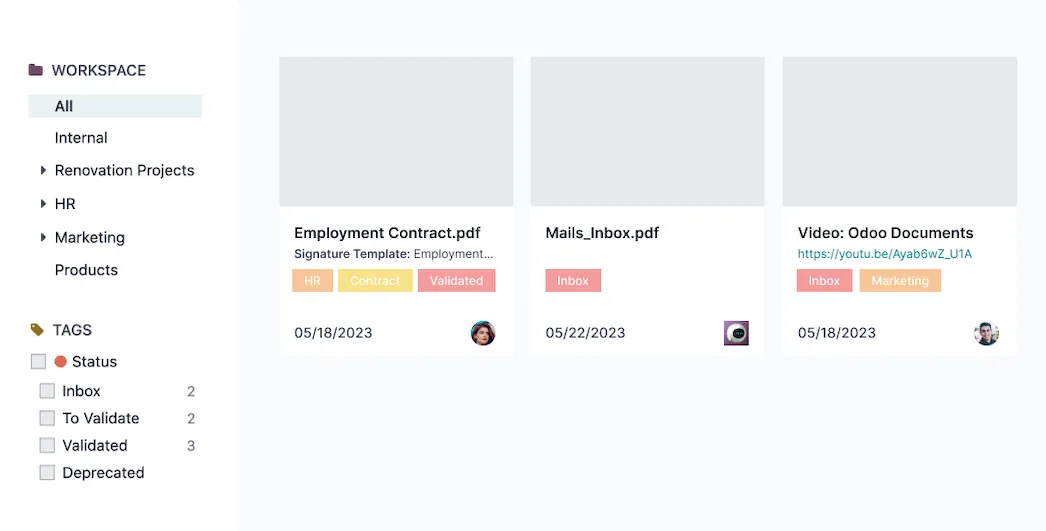
| Attachments and Documents | The bill or receipt is attached to its entry, and Documents files accounting attachments into folders by journal. |
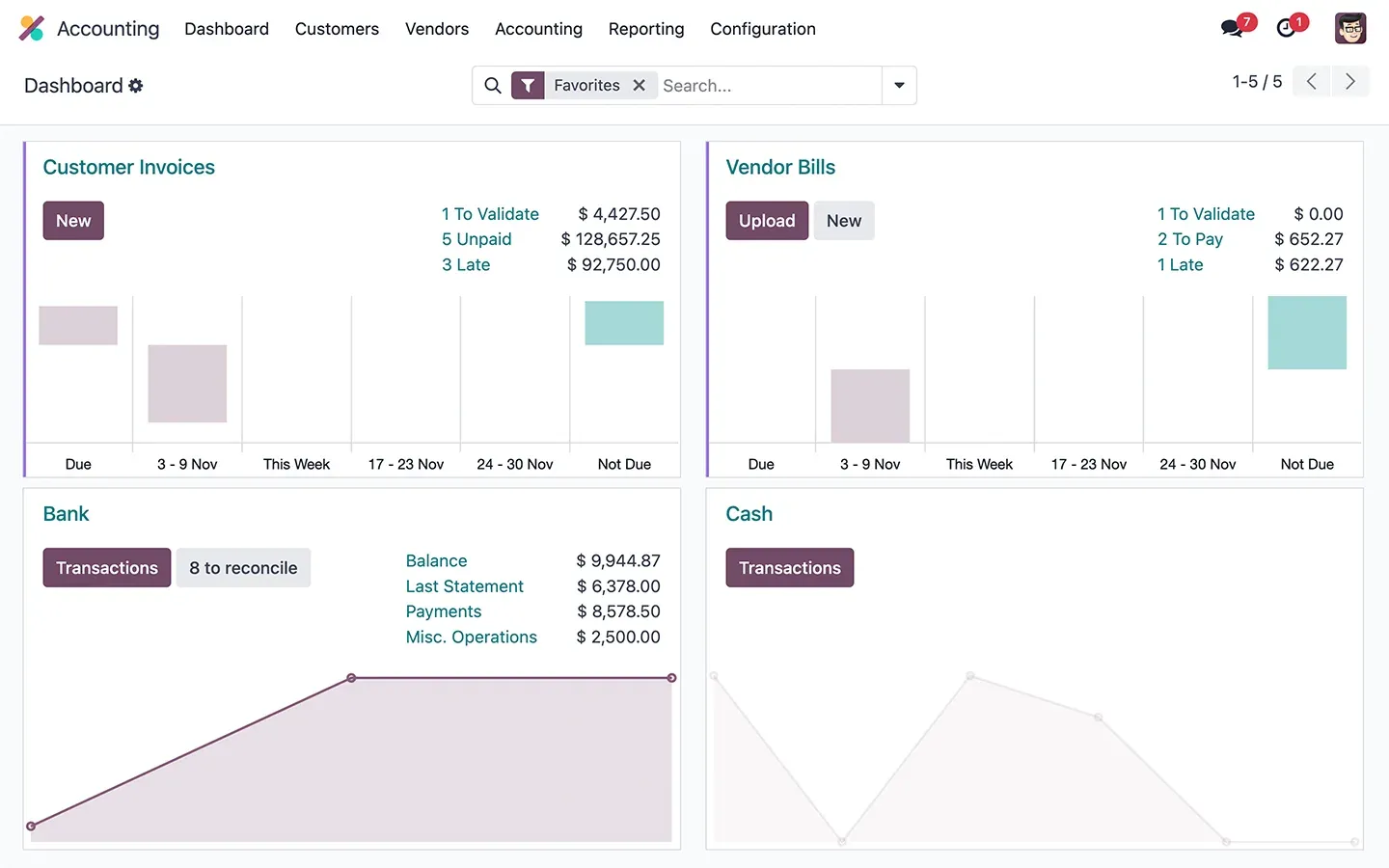
| BIR reports | The Philippine localisation produces the 2550Q, SLSP, SAWT, QAP and 2307 data from the same entries. |
Odoo 20's release notes also add a Book of Accounts for CAS and CBA. See registering Odoo as your computerised books.
You don't need to hire your own team. A TechNext adviser reviews how your records are kept today, then our team in Taguig City sets up Odoo so the documents an examiner asks for are easier to find and export. See how we set up Odoo for BIR requirements.
Rules change. This article reflects the Tax Code as amended by the EOPT Act, RR 7-2024, RR 22-2020, RMO 1-2026 and RMO 22-2026 as reported in published tax alerts on 21 October 2026, and Odoo's 19.0 and 20.0 documentation. It is not tax or legal advice: confirm with your accountant or tax lawyer before you act.
Five years from the day after the deadline for filing the return, under Section 235 of the Tax Code as amended by the EOPT Act. Computerised books are kept as electronic copies.
You have ten calendar days from the BIR's request to submit the documents, under RMO 22-2026.
With the Restrictive Audit Trail setting on, tracked accounting records can only be cancelled or archived, and every change is logged with the user and time.
Under RMO 1-2026 the BIR generally issues one eLA per taxable year covering all taxes, with exceptions such as fraud, tax clearance and one-time transactions.

About TechNext. TechNext Pte. Ltd. is a trusted expert adviser for ERP and compliance: an Odoo Ready Partner headquartered in Singapore, with its main development and consulting hub in Taguig City, Metro Manila and an AI engineering hub in Ho Chi Minh City. Our own experts implement Odoo end to end (discovery, configuration, data migration, training and support), set up with the Philippine (BIR) and Singapore (GST) localisations, for clients in 25+ countries. We are not affiliated with, accredited by or acting for the BIR or any government agency, and we do not file or register on your behalf. About us · Get a quotation
Has the BIR said anything about Odoo? The RRs and RMCs behind CAS, books of accounts, e-invoicing and withholding, in plain English.
SAWT vs QAP, the deadlines under RMC 55-2026, why files get rejected, and how Odoo exports both as DAT files.
Odoo 20's own Philippine payroll package: 1601-C items, 2316, 1604-C and alphalist files, and the 2026 payroll rules behind them.
TechNext sets up your Odoo, can build your website and brand on it, and stays on after go-live, in Singapore and the Philippines. An adviser reviews your situation first.